
Music de Wolfe, or De Wolfe Music – was a Library Music publisher and label established by the De Wolfe family in 1909. De Wolfe began its commercial recorded library in 1927 establishing a vast archive of authentic recordings, sound effects and music. From the 1950s through to the 1990s many specially commissioned recordings were published as records as auditioning copies. These releases were never intended for commercial sale.
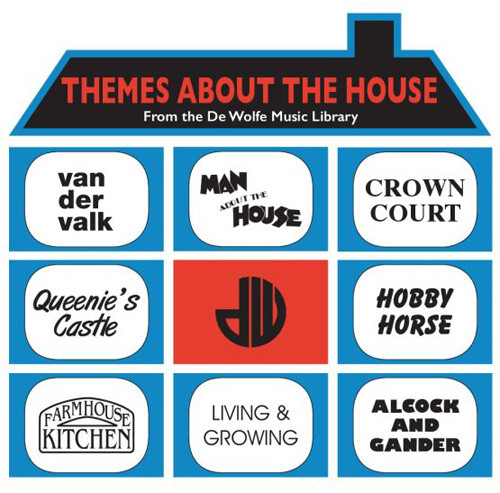
This limited edition 10″ disc is a compilation of themes from the de Wolfe Music Library. It was issued for Record Store Day 2018 in an edition of only 100 copies.
Library Music expert Derek Anderson has produced a detailed study of this album, its tracks and the musicians who performed them on DEREKSMUSICBLOG, as follows:
Side One
Side one of Themes About The House-From The De Wolfe Music Library opens with The International Studio Orchestra’s recording of Eye Level which was penned by Jack Trombey which was the moniker of Dutch composer Jan Stoeckart. Eye Level became the theme to the Dutch detective series Van Der Valk when it made its debut in 1972 and was a surprise hit single in 1973.
Alas that wasn’t the case with Peter Reno’s The Greatest Show On Earth which was recorded by the Tilsley Orchestral and featured on their 1969 album Tilsley Orchestral No. 4. The Greatest Show On Earth went on to become the theme to Queenie’s Castle between 1970 and 1972.
The International Studio Orchestra’s recordings were popular among program makers, and their recording of Simon Haseley’s Little Big John, which became the theme to Hobby Horse. Peter Reno and Simon Haseley wrote Distant Hills which was recorded by The International Studio Orchestra and became the theme to the lunchtime courtroom drama Crown Court.
Another stalwart of library music was composer Jan Stoeckart who used a variety of monikers including Peter Milray who wrote Rollin’ Easy which was recorded by The London Studio Group. It featured on The London Studio Group’s album Bumper Bundle which was released in 1971 and became the theme to Alcock and Gander which appeared on British television screens in 1972, which featured Beryl Reid and Richard O’Sullivan. Alas, the program was short-lived and lasted just one series.
Side Two
The London Studio Group open side two of Themes About The House-From The De Wolfe Music Library with another Jack Trombey composition Living Brass. It featured on The London Studio Group’s album Payola which was released in 1969. Living Brass is sure to bring back memories for British school children who remember the track as ITV Schools Interval Music.
Barbara Moore recorded the album Vocal Shades And Tones for Music De Wolfe in 1972, and on the album was one of her own composition Shades-Tones. It became the theme to Living and Growing which was another program for schoolchildren in Britain.
Peter Moore adopted the name Lee Mason when he wrote Cult and Colour which was recorded by Superstrings Plus and became the title-track to their 1971 album. Later, Cult and Colour became the BBC Schools Interval Music, and is remembered by a generation of British schoolchildren.
In 1969, The Reg Wale Quintet released the album Quintet Of Modern Jazz, which featured the Reg Wale composition Fruity Flute. It became the theme to Farmhouse Kitchen between 1971 and 1990, which introduced the nation to the delights of rural cuisine.
Closing Themes About The House-From The De Wolfe Music Library is Up To Date which was recorded by The Hawksworth Big Band and Strings and featured on the 1969 album The Best Of Johnny Hawksworth. Four years later, in 1973, Up To Date became the theme to Man About The House which starred Sally Thomsett, Richard O’Sullivan and Paula Wilcox and ran for six successful series.